Pregnancy App
- 4.9
- Rating
- 5.00M
- Installs
- Free
- Price
 Analysis by App-foxy
Pregnancy App is the kind of parenting tool I would open when I want a quick, calm way to follow a pregnancy without turning every day into a research project. Its central promise is simple: it lets you track pregnancy in one place. That sounds modest, but the real value is in making the passage of time easier to understand and giving everyday questions a more organized home.
I reviewed it as someone looking for a practical companion rather than a replacement for medical care. The app is free to start, is made by Amila, and is available for users aged Everyone. It supports devices running Android 8.0 or later, which makes it accessible on many older phones as well as newer ones. Optional in-app purchases range from $1.99 to $100.00 per item, so I would pay attention to any purchase screen before confirming anything.
Why pregnancy tracking feels more useful than it first appears
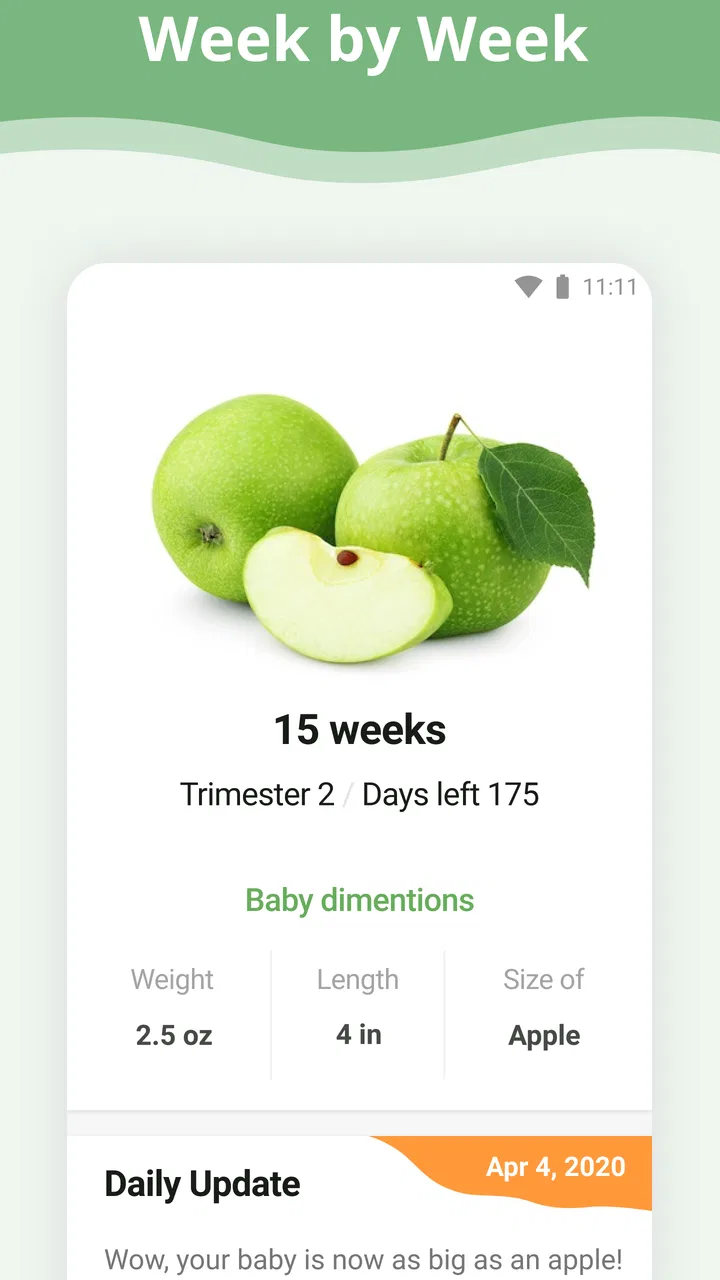
The strongest capability here is the basic pregnancy timeline. Instead of treating pregnancy as a collection of disconnected questions, the app gives the experience a sense of sequence. I can return to it and orient myself around where I am now, what has already happened, and what may be relevant next. That structure is especially helpful during the early weeks, when time can feel both slow and confusing.
You May Also Like

 Blood Strike: 2.5 Anniversary
Blood Strike’s Loadouts Turn Every Drop Into a Tactical Gamble
A close look at Blood Strike’s custom loadouts: how fast access to signature weapons reshapes its battle royale rhythm, rewards preparation, and narrows the gap between fights.

 Pandora - Music & Podcasts
Pandora’s Music Is Easy to Start, but Harder to Recover
Pandora’s strength is its low-effort path from a seed to a station. Its weak spot is how much confidence it asks you to place in connection, setup, and quiet recovery.

 8 Ball Pool
 Is Built on Rivalries, Rematches, and Routine
A close look at the rivalries, rematches, shared routines, and unanswered safety questions that turn a quick pool match into a persistent mobile community.

 Samsung Music
’s Quiet Strength Is Playing What You Already Own
Its reach comes less from spectacle than from dependable access to a personal library. That simplicity is both the app’s strongest retention engine and its ceiling.

 AccuWeather: Weather Radar
AccuWeather Review: A Quick, Clear Forecast for Everyday Decisions
For everyday plans, the best forecast is the one you can understand quickly. AccuWeather makes rain timing, radar, and local conditions easy to act on, with a few trade-offs.

 Hill Climb Racing
Why Hill Climb Racing Still Turns Crashes Into One More Run
A tiny car, a bumpy hill and one more upgrade: Hill Climb Racing keeps resurfacing because its simple chaos makes every near-miss feel personal.
More From Our News Desk
View All News


I like this approach because it does not demand that I become an expert before using it. A short visit can be enough to regain context. If I have been busy, tired, or distracted, I do not need to search through old browser tabs to remember what I was checking. The app’s role is less about producing a dramatic moment of discovery and more about reducing small amounts of mental clutter every day.
That matters in parenting apps. Many alternatives lean heavily toward articles, communities, checklists, or appointment preparation. Those can all be useful, but they may leave the user doing the work of connecting information to the current stage of pregnancy. Pregnancy App is more appealing when the main thing I need is a steady reference point.
The app has built a notably large audience, with over five million installs. Its average rating is 4.9 from around 461 thousand ratings, alongside approximately 9.4 thousand written reviews. Those figures do not prove that every family will enjoy it, but they do suggest that the straightforward tracking idea has connected with many users.
A quieter alternative to constant searching
My favorite aspect of a timeline-based pregnancy tool is the way it changes the question I ask. Instead of searching broadly for “what happens during pregnancy,” I can begin with “what is relevant for me at this point?” That narrower starting point is more manageable and can help prevent information overload.
There is also a useful emotional difference between a general search engine and a dedicated tracker. Search results often mix medical explanations, personal stories, advertisements, and alarming edge cases. A pregnancy app creates a more focused environment. It does not remove the need for judgement, but it can make the first step less chaotic.
I would still avoid treating any app as a diagnostic authority. Pregnancy symptoms can vary widely, and a tracker cannot examine a person, interpret a test, or replace a midwife, doctor, or emergency service. The best use is as an organizing layer around professional care, not as a substitute for it.
Using the timeline in ordinary life
In practice, I would use the app in short sessions rather than trying to consume everything at once. A morning check can provide orientation for the day, while an evening visit can help me note questions that I want to raise at an appointment. This rhythm is more realistic than expecting a busy person to read long explanations every day.
One concrete example is a first pregnancy during a demanding workweek. Imagine noticing a new change on a Tuesday afternoon, then feeling too distracted to investigate it immediately. Instead of opening several unrelated pages later that night, I could return to the app, check the pregnancy timeline, and decide whether the issue belongs in a note for the next appointment or needs prompt professional advice. The benefit is not that the app answers every question; it helps me sort the question before I act.
A second useful routine would be sharing the timeline as a conversation starter with a partner. Pregnancy information can otherwise become unevenly distributed, with one person doing most of the reading and the other receiving occasional updates. A shared look at the current stage can make it easier to discuss plans, concerns, and practical preparation without requiring both people to independently search for the same background information.
I would also use it before appointments. Rather than relying on memory, I could spend a few minutes reviewing what has stood out since the previous visit and write down specific points to ask about. This is a small workflow, but it is more valuable than passively scrolling: the app becomes a prompt for better conversations with a healthcare professional.
For someone who likes to plan, the timeline may also provide a useful mental framework for dividing preparation into smaller periods. I would not assume that every suggested milestone fits every pregnancy, but the chronological structure can prevent everything from feeling like one huge task. I can focus on the current stage instead of worrying about the entire journey at once.
What I would do during the first setup
I would begin by entering only the information the app asks for and then spend a few minutes checking how its timeline is organized. The goal would be to understand the navigation before I need it. I would also look at the purchase flow early, not because payment is necessary for the basic idea to be useful, but because optional items can change how an app feels over time.
My practical tip is to keep a separate list of questions for a clinician rather than assuming that remembering an app screen is enough. When a topic feels important, I would record the wording that concerns me and bring it to an appointment. This prevents the common mistake of using a reassuring general explanation to dismiss a symptom that deserves individual attention.
Another tip is to avoid checking repeatedly whenever anxiety is high. A pregnancy tracker can organize information, but constant refreshing may encourage reassurance-seeking rather than understanding. I would choose one or two predictable moments to use it and step away afterward unless a healthcare professional has advised closer monitoring.
The best scenario for this app
Pregnancy App is at its best for someone who wants a simple, stage-based companion and does not want to assemble a system from several separate tools. It suits a first-time parent who feels unsure about the sequence of pregnancy, a partner who wants a clearer way to follow along, or an experienced parent who prefers a lightweight reference rather than a large planning platform.
It can also help someone who is tired of switching between browser searches. The value is cumulative: one organized place may save only a few minutes on a single day, but it can reduce repeated searching across many weeks. For me, that is the practical effect of the core capability. The timeline turns pregnancy from an abstract span of time into a series of more understandable present-tense steps.
The app is also a reasonable choice for households that want a free starting point. There is no purchase price to begin using it, which lowers the barrier for someone who is still deciding whether a pregnancy tracker fits their routine. I would treat optional purchases as extras to evaluate carefully, not as a reason to assume the whole experience is expensive.
Its Everyone content rating makes it approachable for a broad audience, including partners and family members who may want to understand the general journey. Still, approachable does not mean universally suitable. A person looking for detailed medical records, direct consultations, or a highly customized care plan may need a different kind of service.
When another option may be better
I would skip this app if my main requirement were a complete health-management system connected to clinical records. A simple pregnancy timeline is not the same thing as appointment management, laboratory tracking, medication management, or direct communication with a care team. Those needs belong with tools supplied or recommended by healthcare providers.
I would also look elsewhere if I wanted a strong social community as the main experience. Some people need peer discussion, local support, or long-form personal stories more than they need a chronological guide. A tracker can complement that kind of resource, but it should not be judged as though it were a discussion network.
Likewise, users who dislike reading general pregnancy guidance may find the format less compelling. The app’s strength is orientation through pregnancy information, so someone wanting only a bare date calculator may prefer a smaller utility. On the other hand, someone who wants extensive, deeply personalized medical detail may find a general app too limited for that purpose.
The tradeoffs I noticed
The biggest tradeoff is simplicity versus depth. A focused tracker is easier to revisit than an overloaded platform, but it may not satisfy users who want every possible planning tool in one place. I see that as a deliberate compromise rather than a flaw, provided expectations are realistic.
Another point is the risk of false confidence. A neatly presented timeline can feel authoritative, even when pregnancy does not follow a perfectly neat schedule. I would use the app to understand general progression, then allow a clinician’s advice to take priority whenever personal circumstances differ from the general pattern.
There is also the question of paid extras. The app is free, but in-app purchases are available, with individual items priced from $1.99 up to $100.00. That wide range makes it especially important to pause at checkout and decide whether an optional feature genuinely improves my routine. I would not buy something simply because I felt pressure to unlock a more complete pregnancy experience.
Version 1.4.60 indicates that the app continues to be maintained in a specific release line, but version numbers alone do not tell me whether every change will matter to my needs. I would keep the app updated when practical, while remembering that no update changes its basic role: it remains a pregnancy tracking companion rather than a medical service.
Device compatibility is another practical consideration. Android 8.0 or later is required, so I would check the phone’s software version before planning around it. For most relatively modern Android devices this should be straightforward, but older phones may need attention before installation becomes possible.
How to get more value without overusing it
I would make the app part of a three-step habit: check the current stage, identify one relevant question or preparation task, and then close it. This keeps the timeline connected to action instead of turning it into endless reading. If nothing needs follow-up, I would simply move on with the day.
I would also compare the app’s general guidance with the advice already given by my healthcare team. If the two appear to differ, I would not try to resolve the conflict through more searching. I would ask the clinician which recommendation applies to my situation. That is a more reliable workflow than treating the most convenient explanation as the correct one.
For partners, I would use the app during a weekly conversation rather than sending random screenshots or expecting the other person to explore it alone. We could discuss what feels relevant, what needs preparing, and what should be asked at the next visit. This turns a private tracker into a practical communication aid without pretending it is a shared medical record.
For someone prone to anxiety, I would set boundaries around notifications or checking habits if the app encourages frequent attention. The most useful pregnancy tool is one that supports calm preparation. If it makes me repeatedly search for reassurance, it is no longer serving its best purpose, and a conversation with a healthcare professional would be more appropriate.
Who gains the most from this focused approach?
The clearest audience is a person who wants a dependable pregnancy overview with minimal setup. I would recommend it to a friend who has been opening scattered articles, forgetting where information came from, and feeling unsure about what matters now. The app gives that person a central reference without requiring a complicated planning system.
It is particularly useful early in the learning process. New parents often do not yet know which questions are important, which changes are ordinary, or how pregnancy is divided into stages. A timeline can provide the vocabulary and sequence needed to have more productive conversations with a care team.
Partners can gain from it too, especially when they want to participate but do not know where to begin. The app offers a shared subject for discussion. It cannot create involvement on its own, but it lowers the barrier to asking, “What stage are we in, and what should we talk about this week?”
People who should be cautious are those seeking individualized medical decisions, emergency guidance, or a complete record of care. I would not install Pregnancy App expecting it to replace professional support. I would also avoid making it the only source of information for a complicated pregnancy; in that situation, the care team’s instructions should remain central.
After using it, my opinion is that the app succeeds because it keeps its main idea understandable. The chronological pregnancy view is not flashy, but it has a real everyday effect: it reduces the effort needed to regain context and helps turn vague concern into a clearer question. That is a meaningful benefit when energy and attention are limited.
My recommendation is to try it as a calm organizational companion, not as a medical authority. The free entry point makes that experiment easy, and the strong user response suggests that many people find the approach useful. Just keep the tradeoffs in view, review optional purchases carefully, and bring personal symptoms or decisions to a qualified healthcare professional. Used that way, Pregnancy App is a sensible addition to a pregnancy routine, especially for anyone who values a clear timeline over a crowded collection of features.
FAQs for Pregnancy App
01What features does the Pregnancy App offer for expecting parents?
The Pregnancy App provides a comprehensive range of features including weekly fetal development updates, a kick counter, contraction timer, and customizable birth plan templates. Additionally, it offers dietary advice, exercise recommendations, and a community forum for support and shared experiences, making it a valuable resource for expecting parents.
02Is the Pregnancy App compatible with both Android and iOS devices?
Yes, the Pregnancy App is compatible with both Android and iOS devices. It is designed to provide a seamless experience across platforms, ensuring that users can access all features and updates regardless of their device. This compatibility makes it accessible and convenient for a wide range of users.
03Are there any in-app purchases or subscription fees associated with the Pregnancy App?
The Pregnancy App is free to download, but it offers optional in-app purchases and subscription plans for premium features. These may include access to additional educational content, personalized advice from healthcare professionals, and ad-free browsing. Users can choose to upgrade based on their needs and preferences.
04How secure is personal data within the Pregnancy App?
The Pregnancy App prioritizes user privacy and data security. It employs encryption and secure storage methods to protect personal information. Users can rest assured that their data is handled with care, adhering to industry-standard privacy practices, ensuring that sensitive information remains confidential and secure.
05Can the Pregnancy App be used offline, or does it require an internet connection?
The Pregnancy App offers both online and offline functionalities. While some features, like community forums and real-time updates, require an internet connection, users can access essential tools such as the kick counter and contraction timer offline. This flexibility ensures that users can utilize the app anytime, anywhere.
Pros
- Tracks pregnancy week-by-week efficiently.
- Includes personalized health tips.
- Offers a supportive community forum.
- Integrates seamlessly with wearable devices.
- User-friendly interface for easy navigation.
Cons
- Limited customization options for notifications.
- Some features require a subscription.
- Occasional ads can be intrusive.
- Offline mode lacks full functionality.
- Syncing issues with certain devices.

Pregnancy App
Gallery